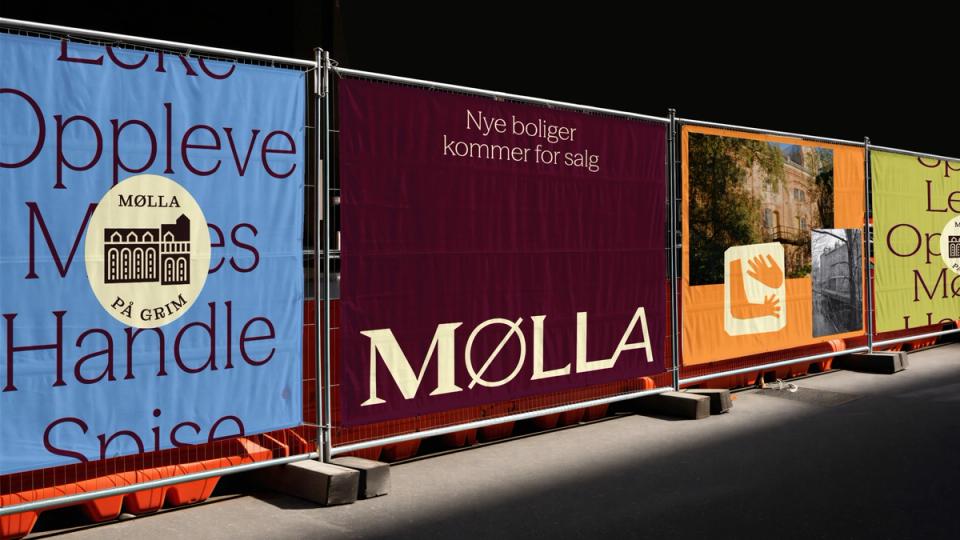
Nonspace built a naming architecture that works as a sales structure today and as the place's identity for the long term. Three tiers hold it together: Mølla as the core identity, the history and life that binds the area; “på Grim” as the anchor that roots it in the city, Mølla as identity and Grim as belonging; and a family of sub-names, Mølleparken, Møllehagen and Mølleplassen, one for each building phase.
The same names that structure and sell the homes now become the streets, squares and addresses people live by later, extended through a wayfinding layer of Mølletorvet, Mølletrappen and Møllegården.
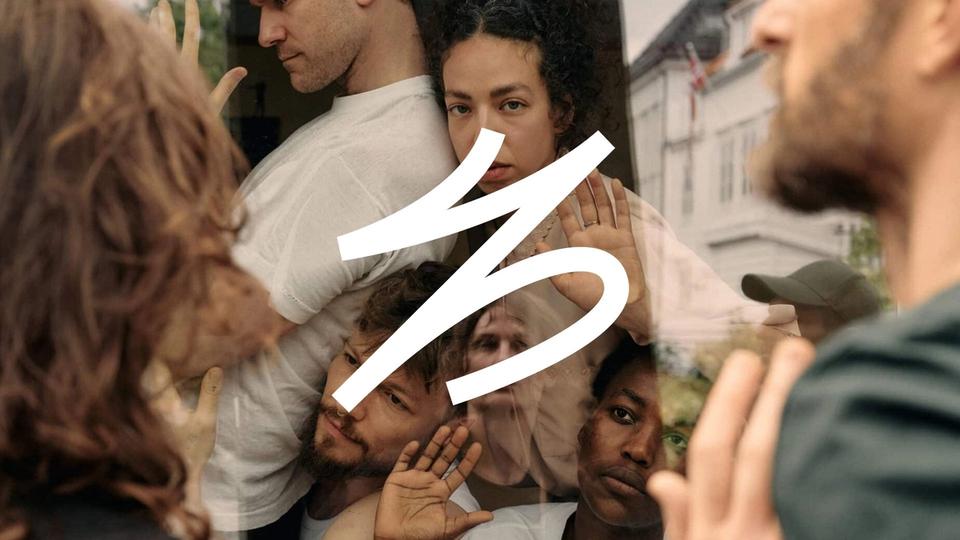
On that foundation Nonspace built the brand strategy on the Brandcell® model and the communication platform, Forbindelser, working across community, culture, business and city, with the place's own past, people and future as the engine for its stories. Each audience got a distinct address: buyers, businesses and tenants, and the cultural actors who give the place its texture.
A Design DNA framework translated 380 years of industrial heritage, architectural detail and signage into living design principles, developed in coordination with REN Architecture.
From there came two distinct visual directions and a complete system: logo, colour, typography, graphic elements and application guidance. The primary Mølla logo carries into each building-phase identity, so the brand thread holds while the expression is tuned for property marketing.
The whole system lives in Brandspace Manager, a single, always-accessible brand manual that keeps it usable for everyone who builds on it.
Throughout, the placemaking was shaped with Folk, local historians, neighbours and the artists on site, and with Hilde Kvivik Kavli of Svendsengruppen, a creative lead in the development driving entrepreneurial opportunities, strategic partnerships and the documentation of its history.